
L’Epée 1839 - Belly Tank Racer
In the vast, white expanse of Utah's Bonneville Salt Flats, a post-war revolution took shape. Pilots returning from WWII looked at surplus aircraft drop tanks—not as scrap, but as destiny. These teardrop aluminum shells, engineered by necessity for aerial combat, became the raw material for land-speed legends. Stripped to their essence and powered by sheer audacity, belly tank racers redefined what speed could look like.
Nearly eight decades later, that same spirit of ingenuity finds its most sophisticated expression yet in the L'Epée 1839 Belly Tank Racer—a kinetic sculpture that transforms mechanical horology into high-octane poetry.
A Racing Pedigree, Reborn
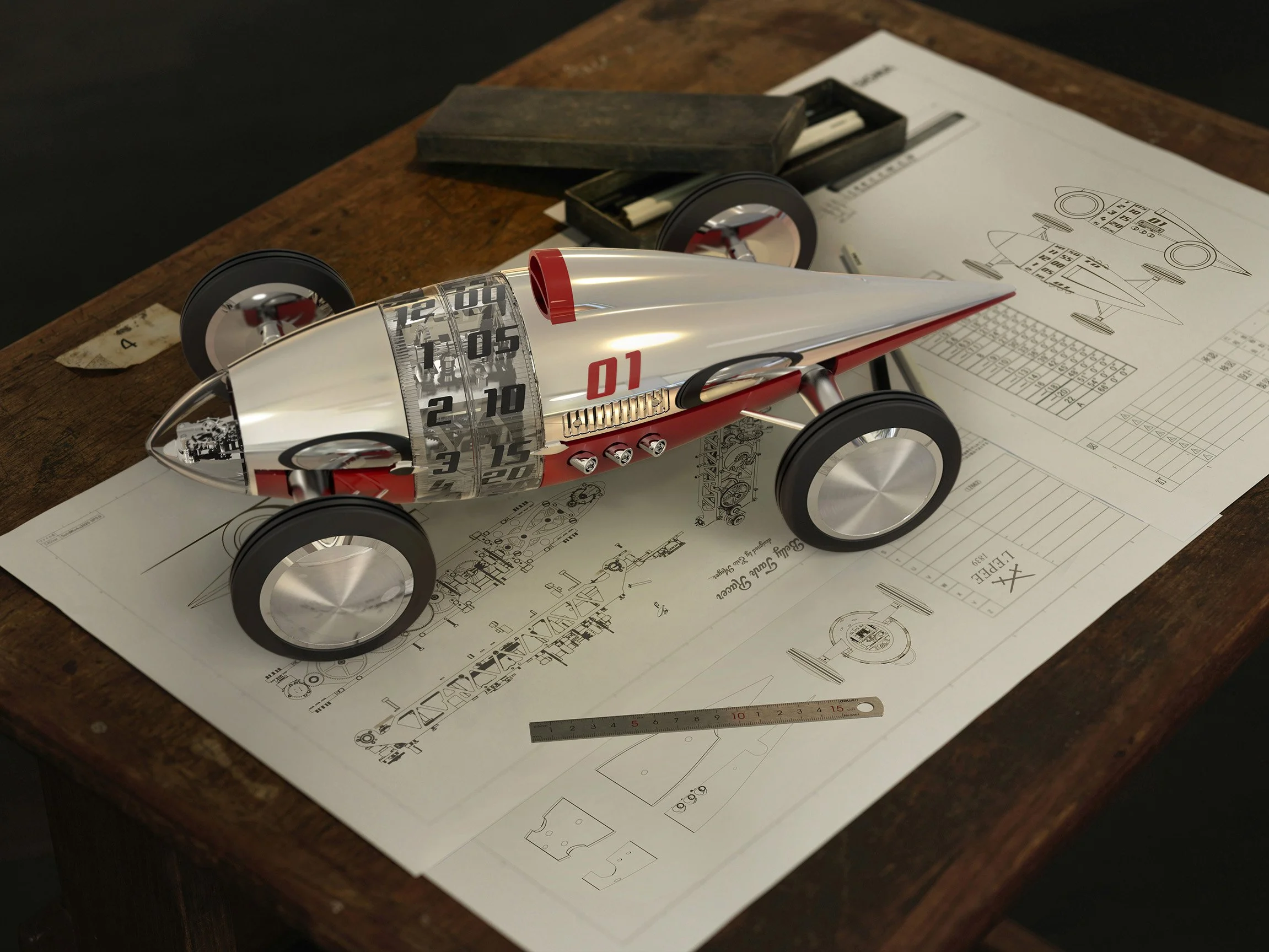
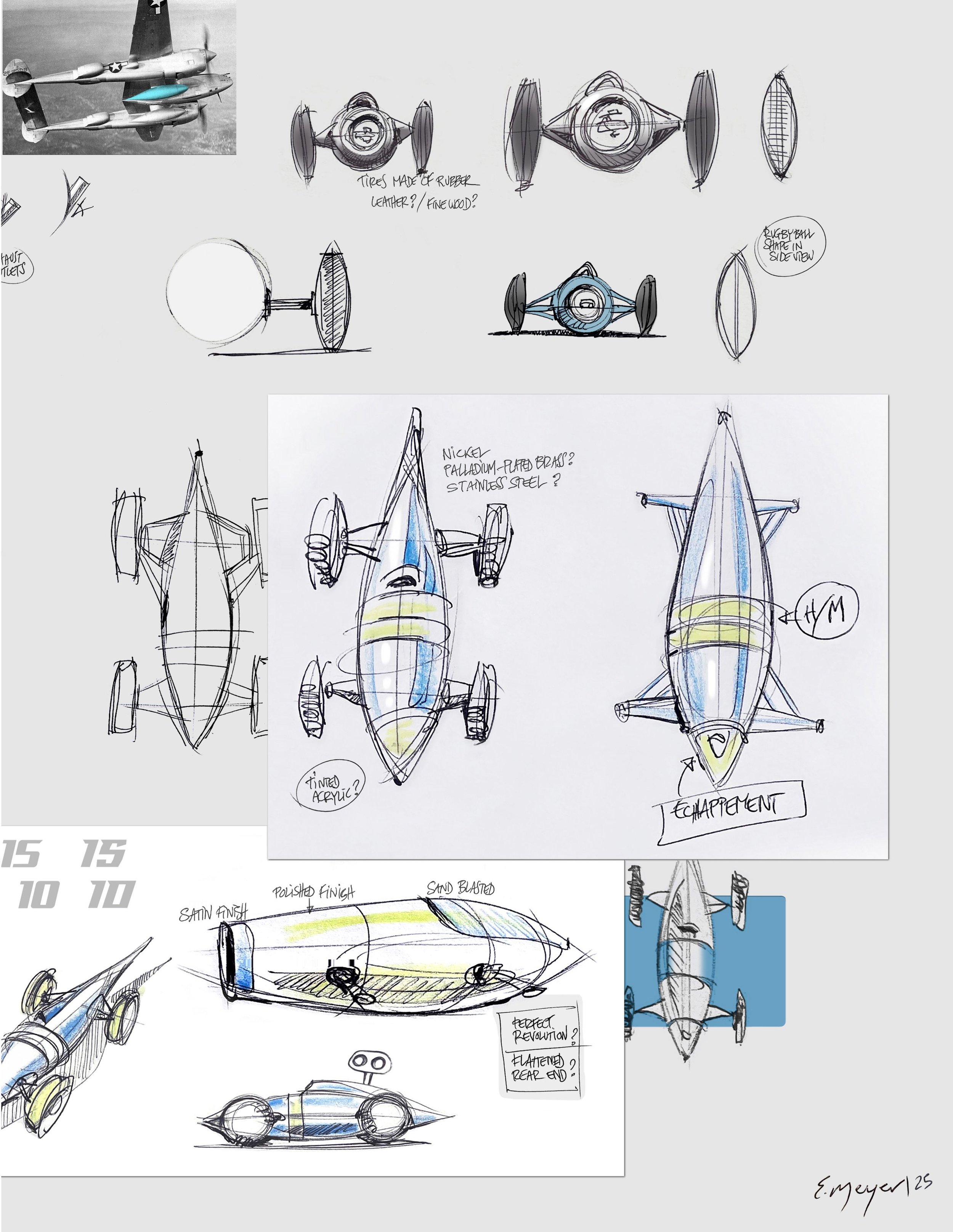
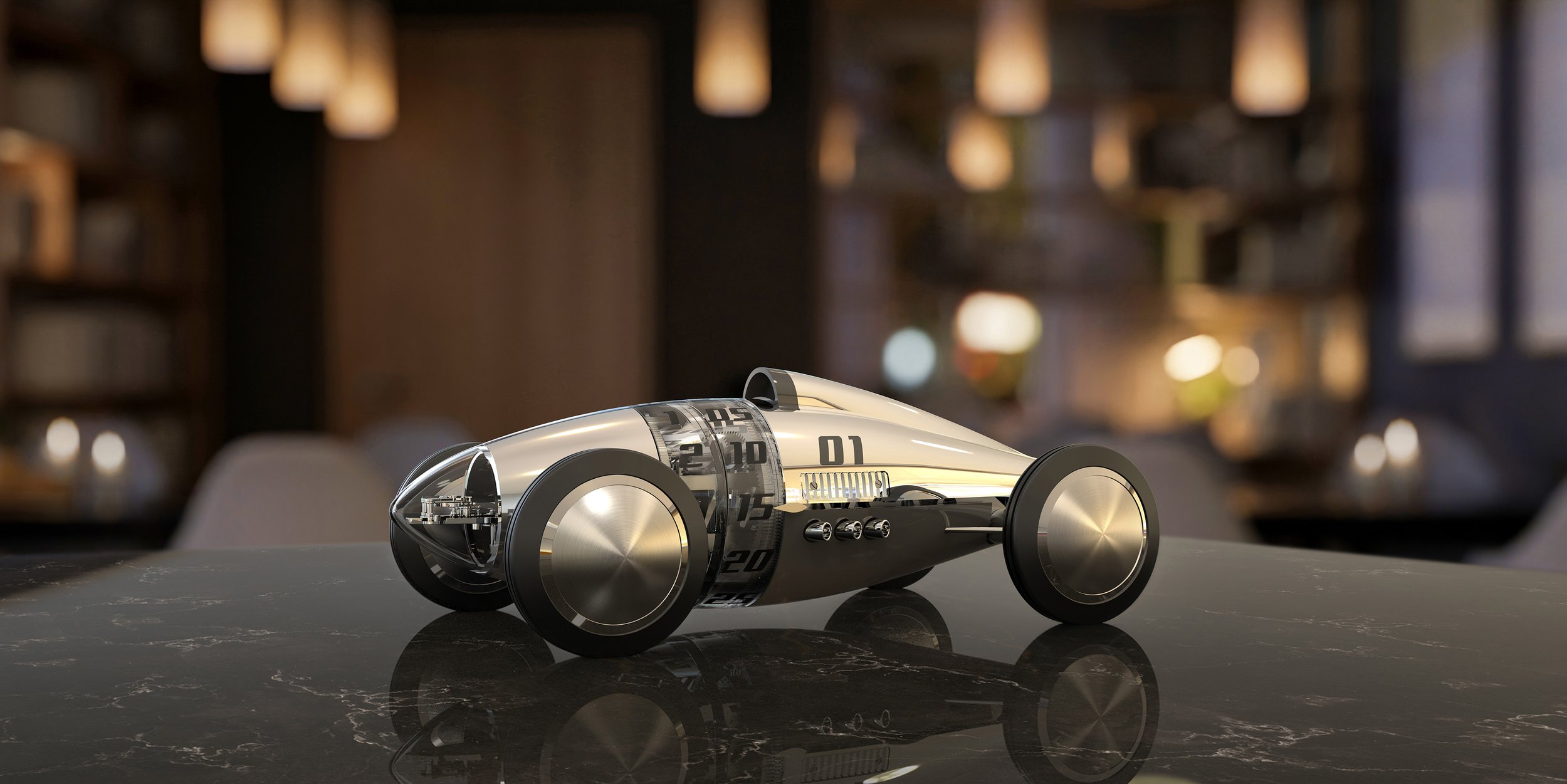
At 420mm in length and sculpted from aluminum with the unmistakable silhouette of a 1940s streamliner, the Belly Tank Racer is instantly recognizable as something far beyond a conventional clock. Designed by Swiss visionary Eric Meyer, whose portfolio spans collaborations with Rolex, MB&F, and Nespresso, this piece bridges eras with remarkable confidence.
The elongated, wind-shaped body echoes the original racers that sliced through air across California's dry lake beds and the salt flats of Bonneville. Yet nothing here is mere nostalgia. Meyer has distilled the essence of speed into a form that feels undeniably contemporary—low, narrow, and engineered with purpose. The upper and lower bodywork, crafted in aluminum and finished in lacquer, is available in five distinct racing livery colors: Blue, Green, Metallic Grey, Red, and Black. Each variant is strictly limited to just 99 pieces, ensuring that ownership remains as exclusive as the history it celebrates.
Where Form Follows Velocity
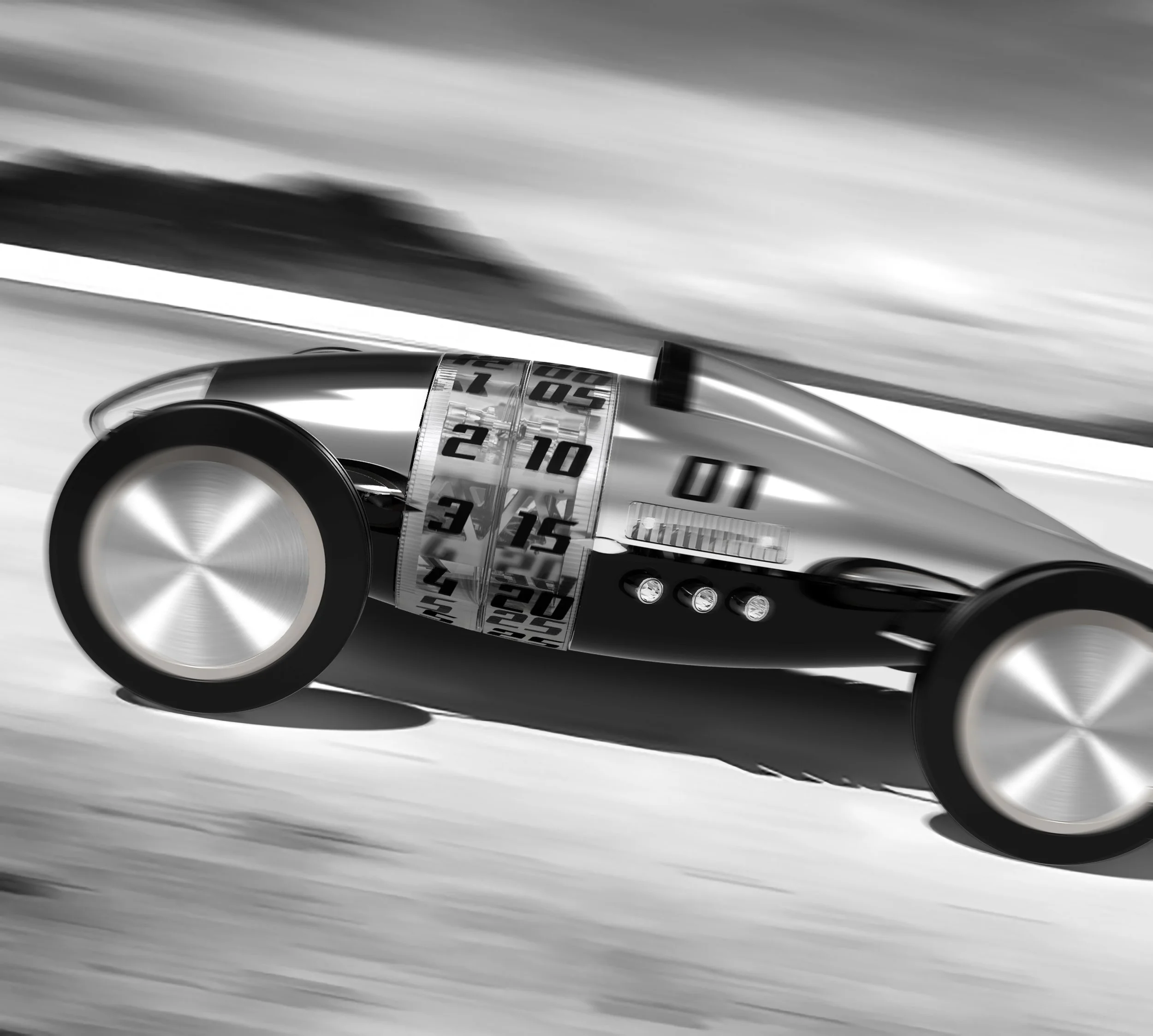
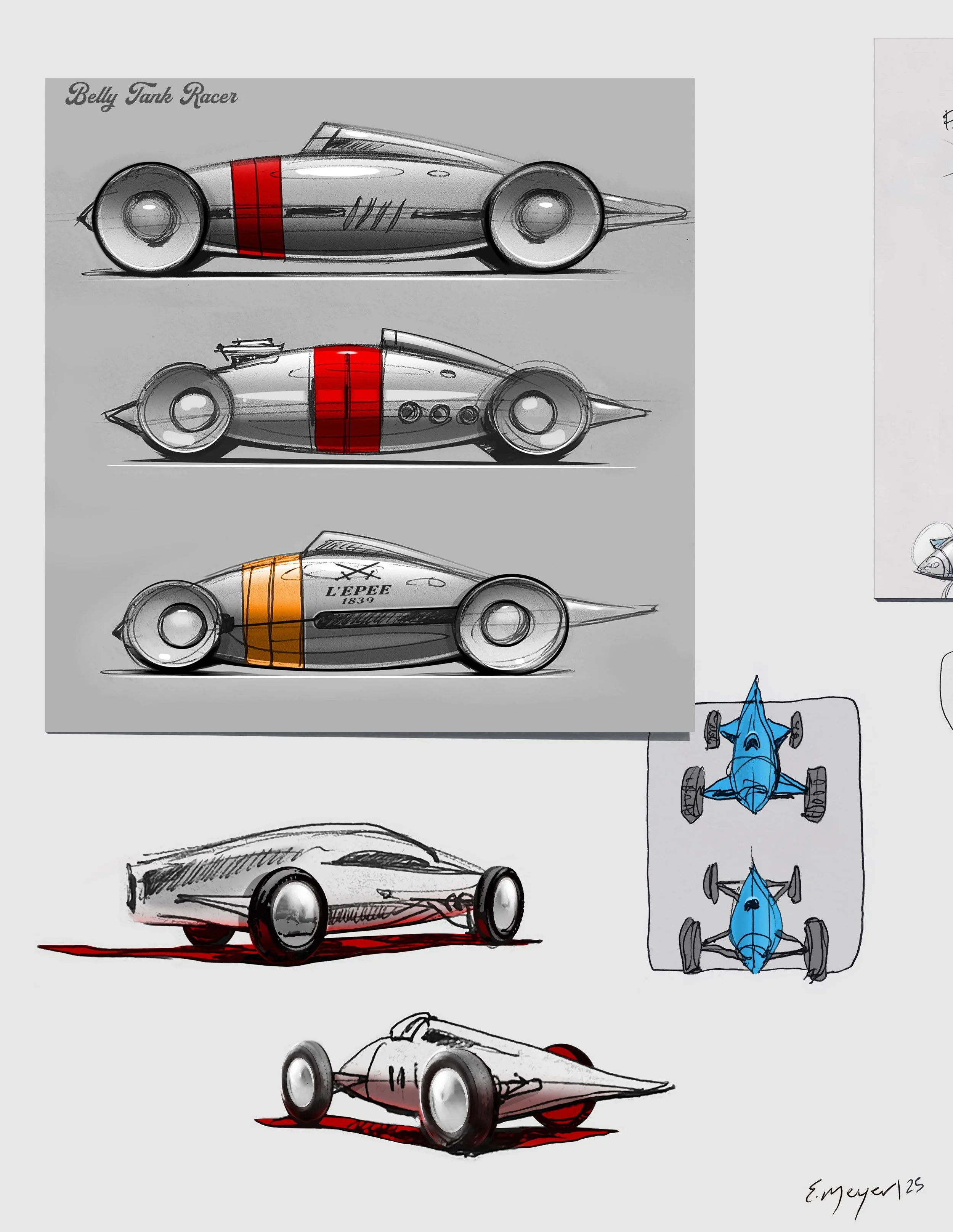
True to both racing philosophy and L'Epée 1839's 180-year heritage, every element of the Belly Tank Racer serves a function. The lightweight aluminum construction and slim steel rims mirror the competition wheels of the 1940s, while soft rubber tires lend authentic weight and presence to the aerodynamic silhouette.
But the mechanical storytelling goes far deeper. Positioned at the very front of the body—where airflow would first meet the machine—the escapement takes pride of place. This beating heart of the movement captures the forward thrust and daring velocity that defined the original belly tank racers. It is a visual metaphor made metal: momentum incarnate.
Alongside the "cockpit," a meticulously sculpted V6 engine sits beside the driver's position, just as it would in the narrow confines of a real streamliner. Here, the driver lay almost flat, becoming one with the machine's aerodynamic profile. L'Epée translates that symbiosis into horological theater—every gear, every oscillation, becomes part of the visual experience.
The Mechanics of Wonder
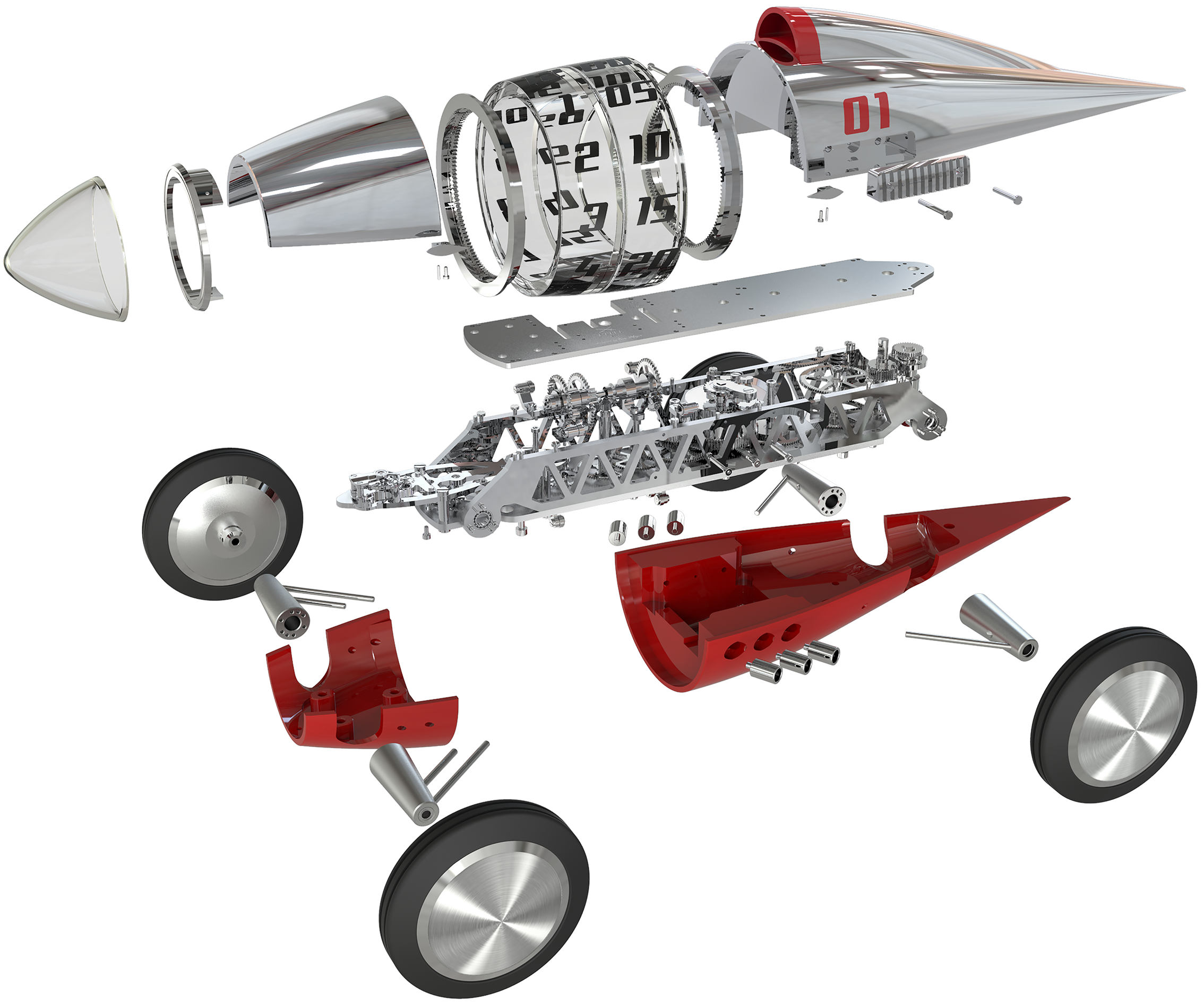
Lift the aerodynamic shell, and L'Epée 1839's technical mastery reveals itself. The manufacture's in-house movement beats at a classical 2.5Hz (18,000 vibrations per hour) and features an impressive 8-day power reserve. An Incabloc shock-protection system ensures reliability befitting a machine bred for speed.
Yet it is the interaction with this timepiece that truly delights. Time is displayed on two transparent rotating discs, allowing hours and minutes to glide effortlessly across the visible mechanism like painted racing graphics wrapping around the central cylinder. The display integrates so seamlessly into the body that time becomes part of the machine rather than an addition to it.
Setting the time requires nothing more than rotating the transparent minute disc by hand—an intimate, tactile gesture. But the pièce de résistance is the winding mechanism: simply pull the Belly Tank Racer backward. As the rear wheels turn, they wind the movement inside, much like the mechanical toy cars of childhood. This direct, playful action transforms a daily ritual into an emotional connection, linking motion to timekeeping in a way that no traditional clock can replicate.
The Philosophy of Essentialism
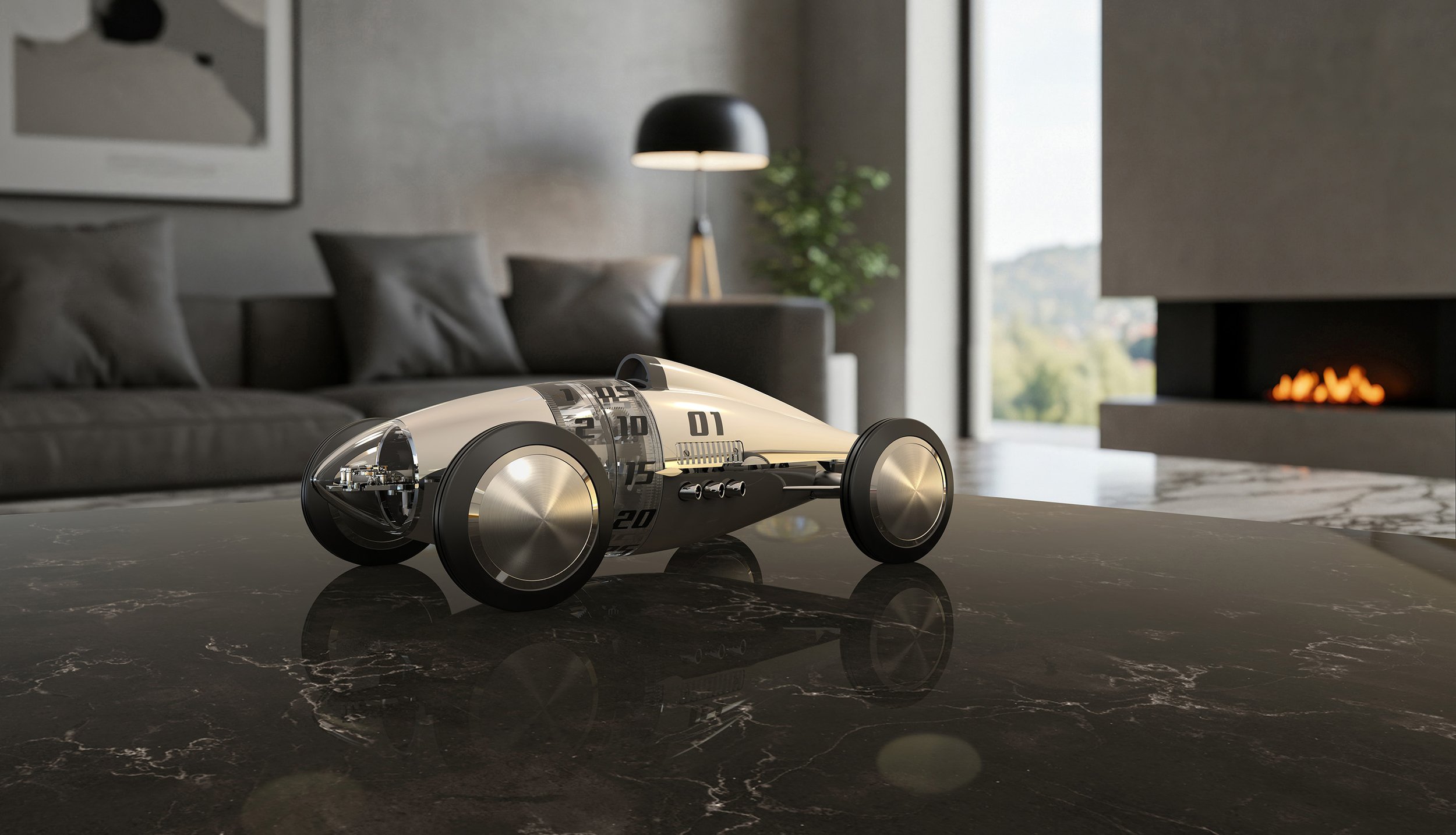
The original belly tank racers were defined by a ruthless design ethos: reduce, refine, remove everything unnecessary. They were built around simple tubular chassis—frameworks of welded steel engineered for maximum strength with minimal mass. Every element served speed.
L'Epée 1839 honors that philosophy completely. The polished steel rims echo stripped-down competition wheels. The clean, understated design rejects excess in favor of pure efficiency. At 5.4kg, the piece possesses substantial presence without unnecessary bulk. Materials including palladium-plated brass, polished stainless steel, and acrylic glass for the cylinders and dome are finished with a combination of polished, satin-finished, and sandblasted surfaces that catch light like polished coachwork beneath the Bonneville sun.
Technical Specifications
Dimensions
Length: 420 mm
Width: 212 mm
Height: 123 mm
Weight: 5.4 kg
Functions
Hours and minutes displayed on two transparent rotating discs.
Time is set by rotating the minute disc clockwise by hand.
The clock is wound by rolling the piece backwards, rotating the rear wheels in a pullback-car motion. The piece moves freely forwards.
Movement
Calibre: L'Épée 1839, developed and manufactured in-house
Frequency: 18,000 vibrations per hour (2.5 Hz)
Jewels: 11
Power Reserve: 8 days
Shock Protection: Incabloc
Body & Wheels
Upper and Lower Body: Aluminum
Rims: Steel
Tires: Soft rubber
Materials & Finishes
Palladium-plated brass, polished stainless steel, acrylic glass for the cylinders and dome.
Limited Edition: 99 pieces
Available Colors: Blue, Green, Metallic Grey, Red, Black
Price: HKD $310,000